

Skip to content

Smart water infrastructure

Sell safe water reliably. Get paid for every litre.

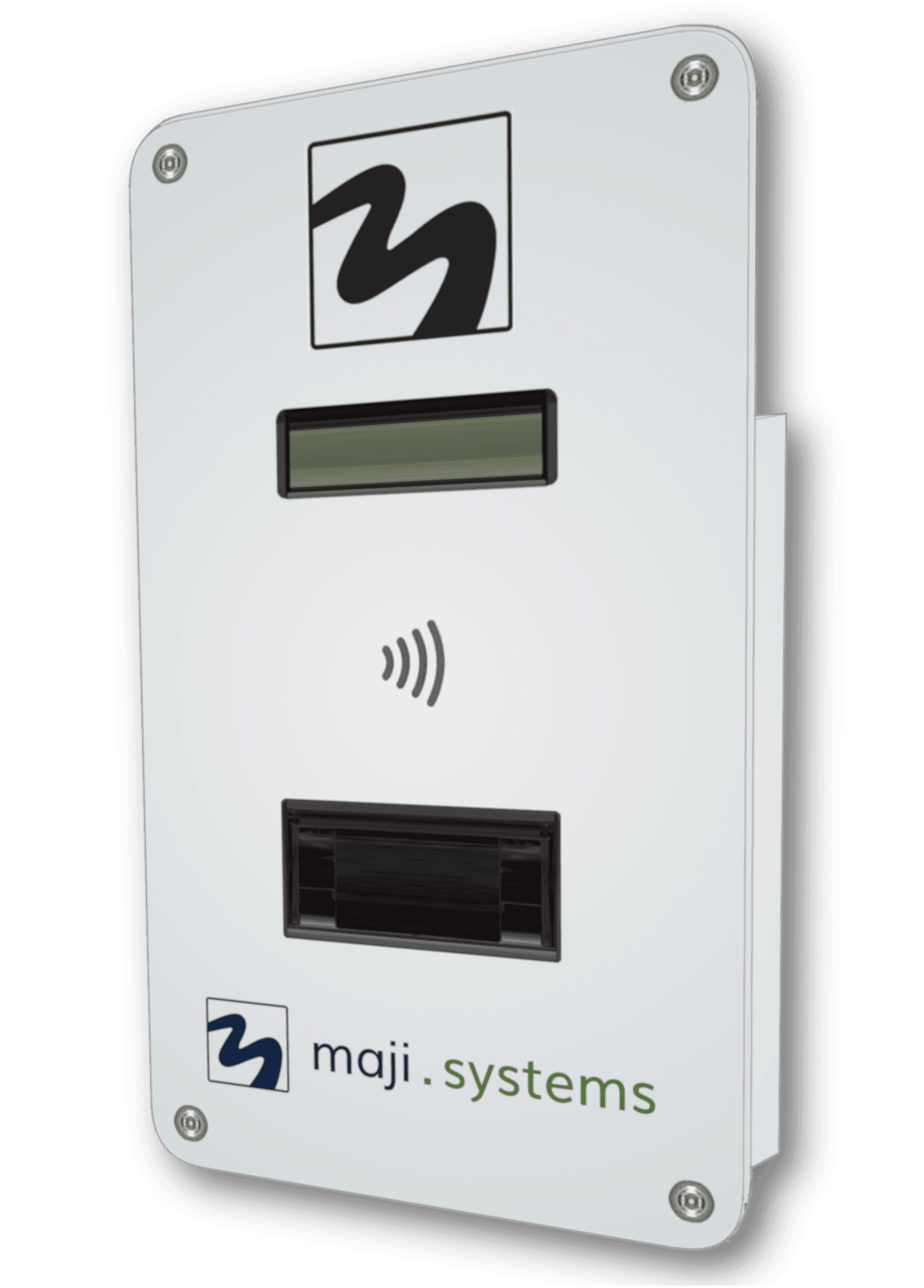
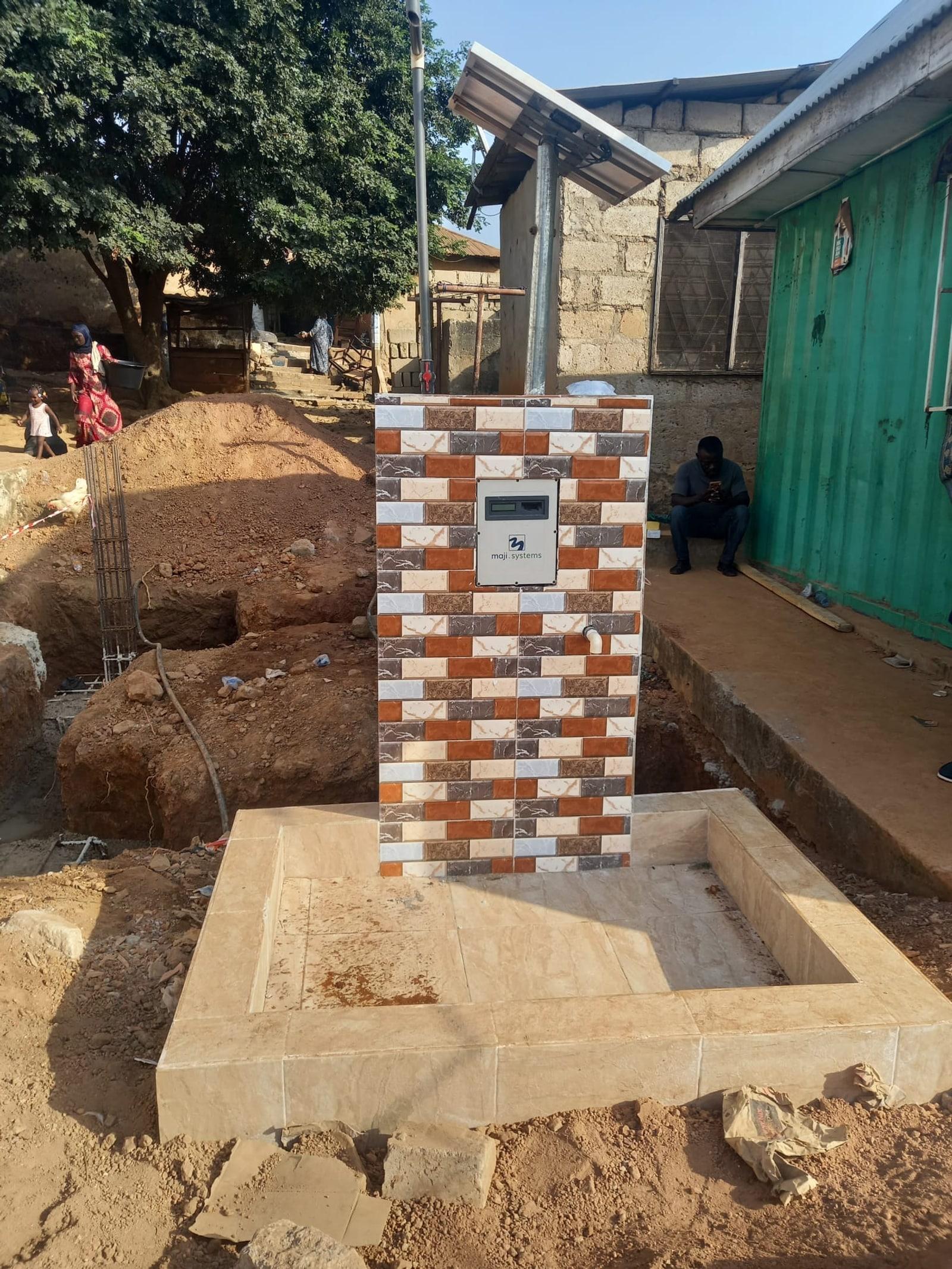
The Maji Community Dispenser is a solar-powered water point with prepaid NFC WaterCard payments built in. NGOs, community water committees and operators use it to turn water schemes that leak revenue into services that fund their own maintenance.

  • Prepaid NFC WaterCard payments
  • Solar powered, no grid required
  • Fully functional offline
  • IP66 waterproof enclosure
A solar-powered water tower with an integrated Maji Community Dispenser at a rural water point

Impact to date

What the fleet has delivered

Figures as of August 2026

50+
Dispensers deployed
2,000+
People served daily
200M+ L
Water dispensed

Metered and delivered through Maji Community Dispensers

Why operators choose Maji Systems

Built for the places where water schemes usually fail

Most rural and peri-urban water points do not fail because the hardware breaks. They fail because nobody can collect enough revenue to fix it when it does. Maji Systems closes that gap.

Revenue you can actually collect

Prepaid tokens remove cash handling, credit risk and informal pricing. Every litre is metered at the tap and reconciled to your account the same day.

No grid, no problem

A built-in 14 Ah battery, charged by a 50 W+ solar panel through a regulated controller. Dispensing continues through network outages and syncs when connectivity returns.

Serviceable by local technicians

The valve and flow meter are the two parts scheduled for routine replacement — every two years or 100,000 cycles — and both are available individually from the webstore.

Reporting funders accept

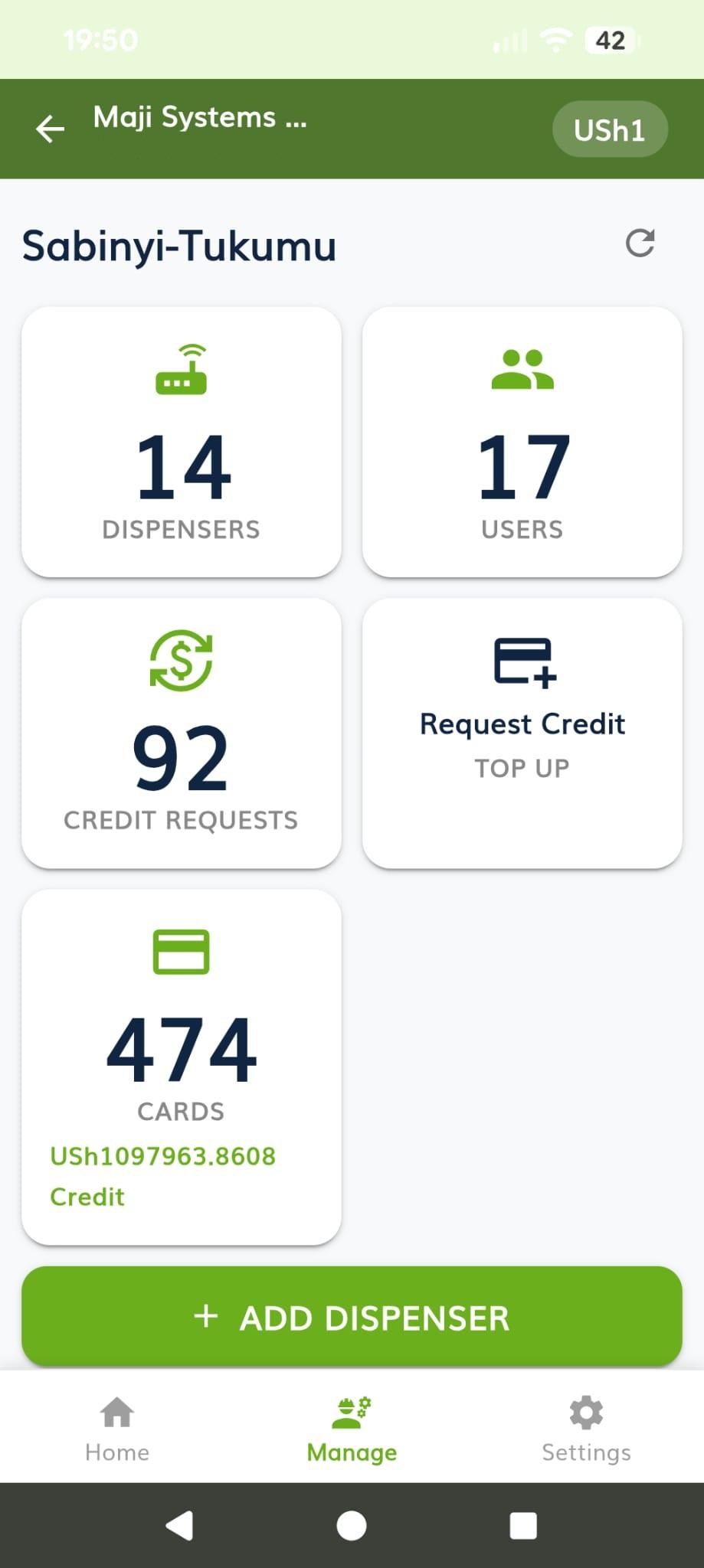
Volume, revenue and maintenance data per site, with long-term trend graphs and data exports from the web dashboard.

Cards that cannot be cloned

MIFARE DESFire WaterCards with AES-encrypted data. Genuine NXP cards are rated for up to a million write cycles.

Standalone or Flush, one dashboard

The same electronics and payment stack in a self-contained Standalone unit or a Flush kiosk installation, reporting into the same web dashboard.

How it works

From site survey to self-funding water point

Four steps, typically eight to twelve weeks from first conversation to water flowing.
  1. 01

    Assess the site

    We size the dispenser to your source, demand profile and tariff, and model the revenue before anyone commits to hardware.

  2. 02

    Install in a day

    A two-person team commissions each unit on a concrete pad. No grid connection, no trenching, no specialist contractor.

  3. 03

    Sell water, get paid

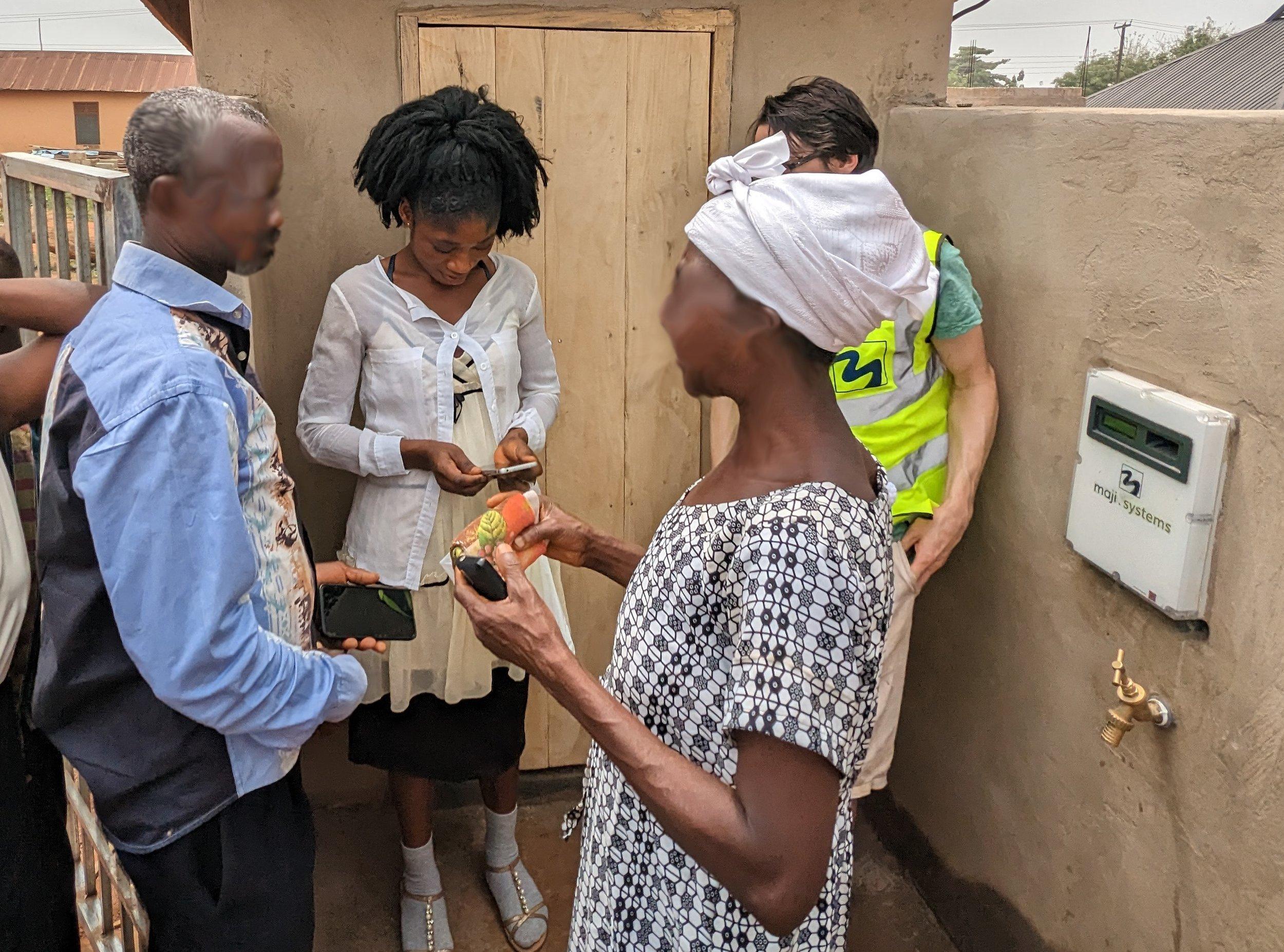
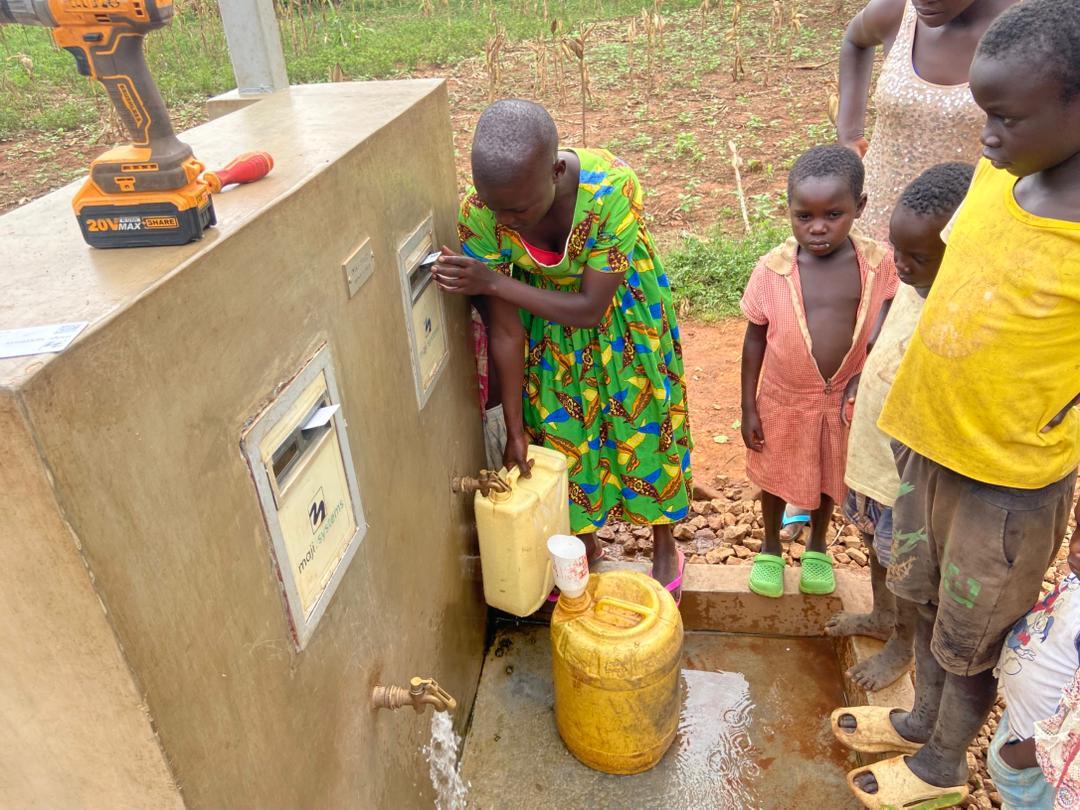
    Customers tap a prepaid token and draw exactly what they paid for. Revenue lands in your account, reconciled automatically.

  4. 04

    Run it on the data

    The dashboard shows volume, revenue and faults per site, so problems surface before a queue forms at a dry tap.

The numbers behind it

Why the model holds up in the field

Indicative figures for what the prepaid model is designed to achieve — ask us for the data behind a specific deployment.
99.2%
Payment collection rate

Prepaid tokens remove credit risk and cash handling entirely

99.6%
Uptime across the fleet

Rolling 12-month average, measured by hourly device heartbeat

14 months
Median payback period

From commissioning to full capital recovery for operators

0
Grid connections required

Solar and battery powered, with offline-first operation

Illustrative figures, not yet independently verified.

Case studies

Operators running Maji Systems today

Community water committees and NGOs using prepaid dispensing to make water services pay for themselves.
A solar-powered Maji Community Dispenser on a grey-tiled standpipe base in Kumasi, Ghana, in front of a house with red-trimmed columnsGhana

Ghana Water Limited (GWL) · Public utility standpipes

7 Maji Community Dispensers bring metered water to public standpipes across Kumasi, Ghana

Ghana Water Limited (GWL) worked with Maji Systems to fit seven public standpipes across Kumasi with solar-powered, prepaid Community Dispensers, giving GWL a metered record of consumption at each site rather than a single unmeasured connection.

7
Standpipes converted
2024–25
Phased rollout

Read the case study

A Maji Community Dispenser installed at a village standpipe in the Ashanti Region, GhanaGhana

Community Water Committee · Rural community water

Maji Community Dispensers provide 24/7 clean water to 2,000 residents in Ashanti

Existing standpipes across the Ashanti Region were fitted with Maji Community Dispensers, replacing informal cash collection with prepaid WaterCards and giving the village water committee a transparent, accountable record of every sale.

2,000
Residents served
24/7
Water availability

Read the case study

Next step

See a Maji Systems dispenser in operation

Book a 30-minute walkthrough with an engineer. We will show you live fleet data from a comparable deployment and model the numbers for your own sites.