Skip to content

The product

Maji Community Dispenser

A solar-powered water point with prepaid NFC WaterCard payments built in. Available as a self-contained Standalone unit or a Flush kiosk installation, commissioned without a grid connection and serviceable by a local technician.

From £575 per unit · typical lead time 6–8 weeks

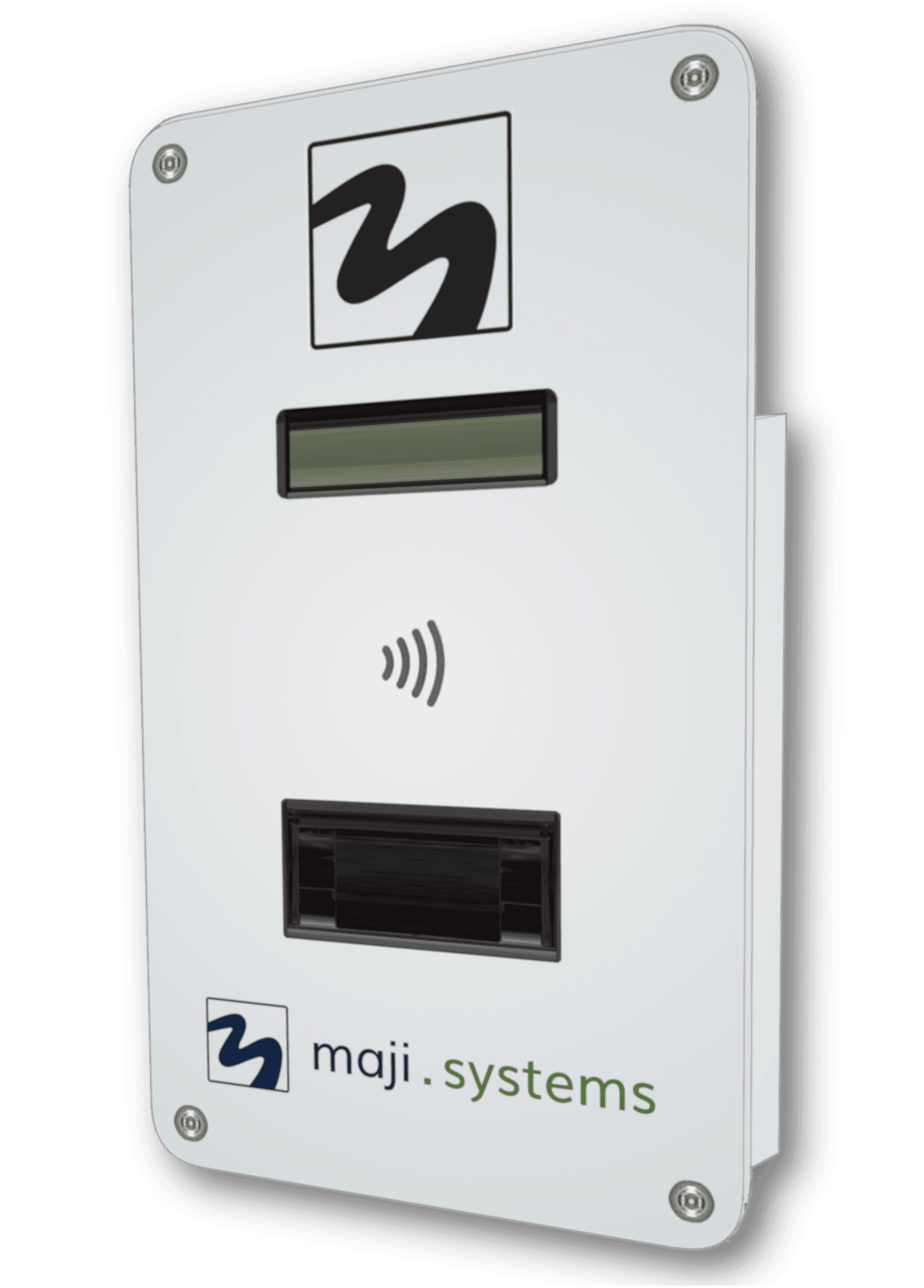
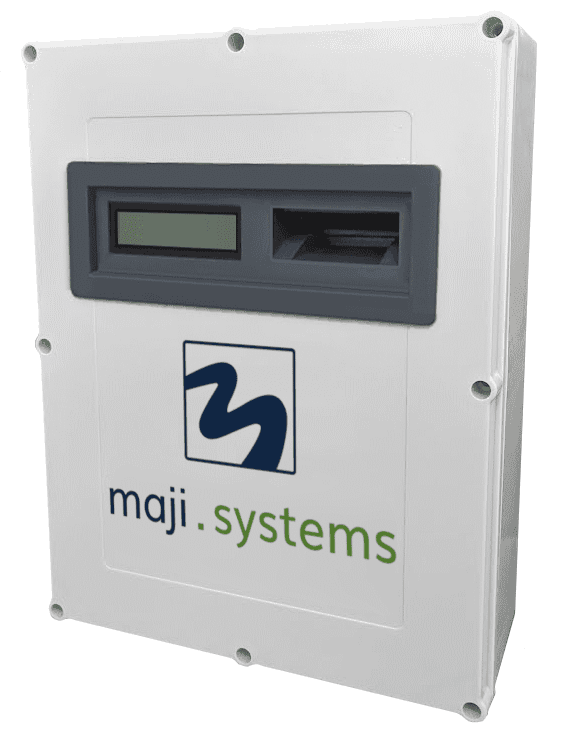
Maji Community Dispenser, Standalone variant, showing the enclosure and payment module
99.2%
Payment collection rate

Prepaid tokens remove credit risk and cash handling entirely

99.6%
Uptime across the fleet

Rolling 12-month average, measured by hourly device heartbeat

14 months
Median payback period

From commissioning to full capital recovery for operators

0
Grid connections required

Solar and battery powered, with offline-first operation

Two configurations

Standalone or Flush — same electronics, different install

Both run the same payment system, connectivity and monitoring. The difference is how the plumbing sits at the water point.
Maji Community Dispenser, Standalone variant, a single self-contained enclosure

Standalone

  • Integrated plumbing in a single enclosure
  • Mounts directly onto a concrete standpipe
  • Retrofits existing water points with no extra civils
  • Easy, one-unit installation
Maji Community Dispenser, Flush variant, showing the seamless faceplate

Flush

  • Seamless, waterproof polycarbonate faceplate
  • Separate plumbing module, installed with rear access
  • Built for kiosk and wall-mounted installations
  • Also known as the Split System

NFC cards

Two cards, two jobs

Every dispenser works with two kinds of MIFARE DESFire card, told apart by colour so nobody mixes them up on site.
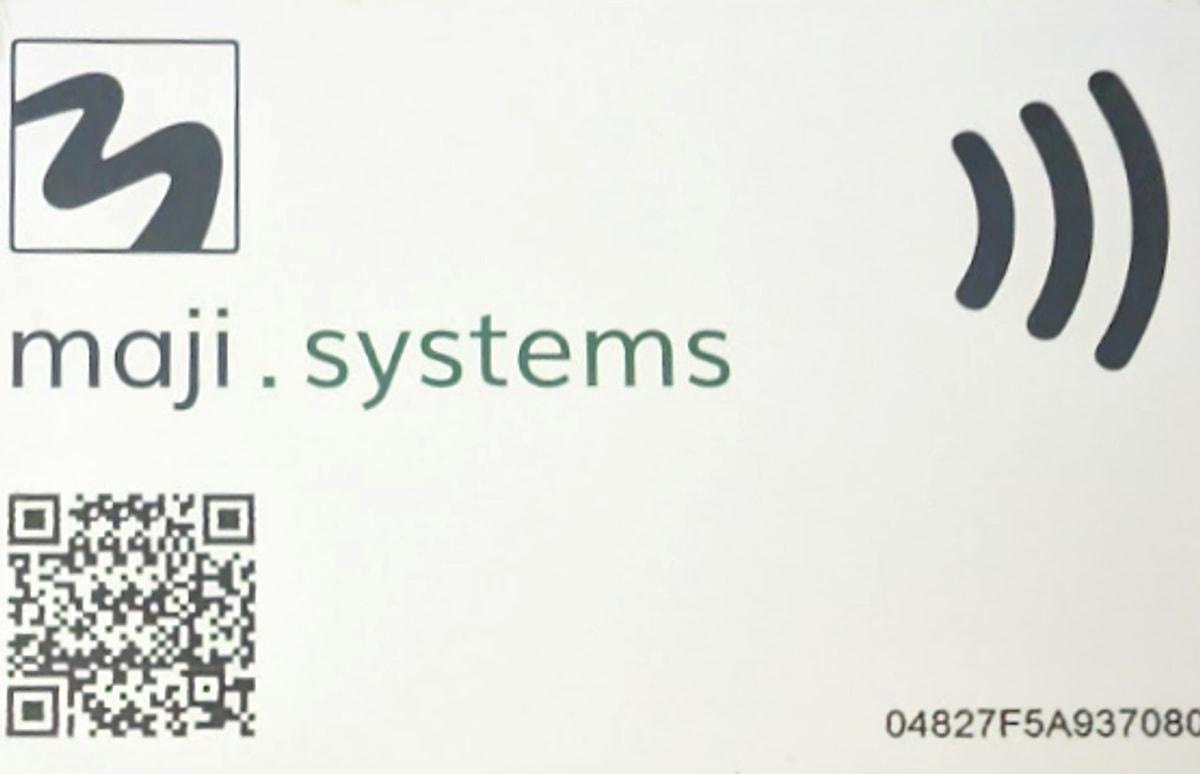
A white Maji Systems WaterCard, the prepaid NFC card customers use to buy water

WaterCard

Given to customers. Top up credit onto it, then insert it into the dispenser to buy water — the balance is deducted for exactly what is drawn.

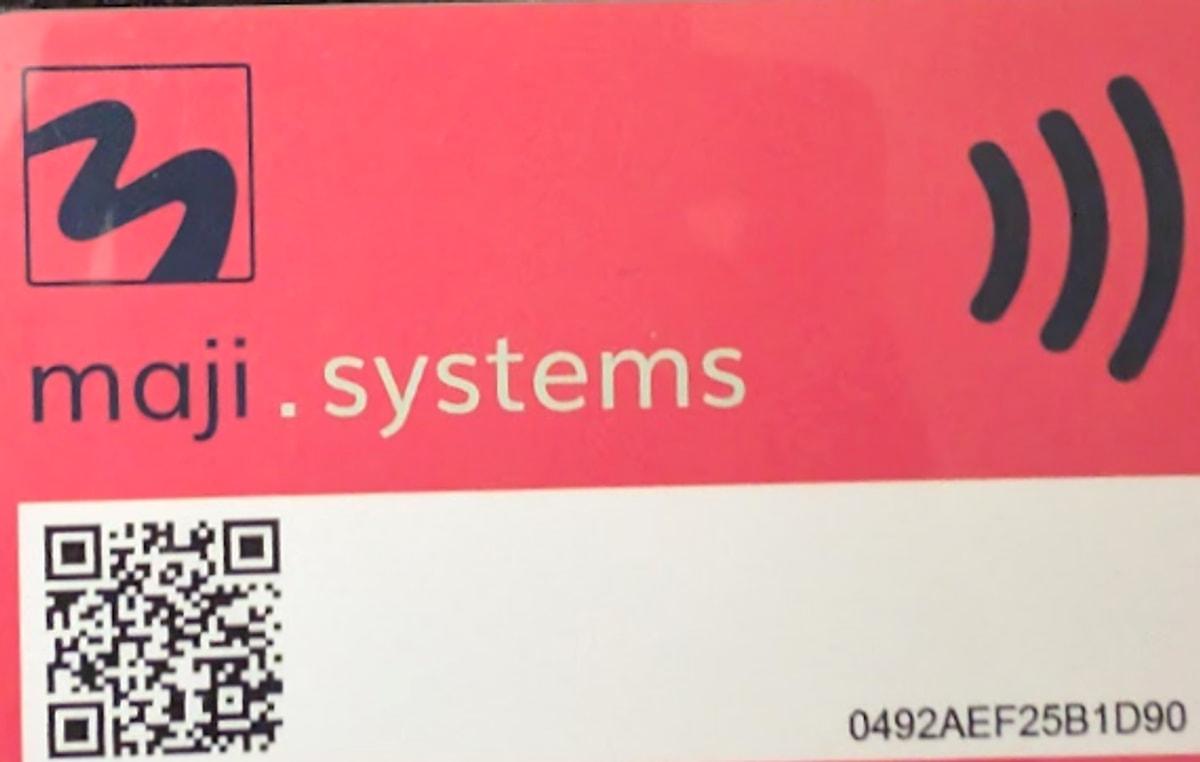
A red Maji Systems Engineer Card, used to check and change dispenser settings

Engineer Card

For technicians, not customers. Checks and changes dispenser settings, and reads live status — battery and solar voltage, price per litre, and more.

Features

What is inside the enclosure

Prepaid NFC WaterCards

MIFARE DESFire technology, AES encrypted and impossible to clone. Compatible cards can be self-sourced, and the free Android app handles reseller top-ups even offline.

Solar powered, off-grid

A built-in 14 Ah lithium-ion battery, charged by a 50 W+ solar panel through a regulated controller. A 12 V DC mains input is supported, never required.

Offline-first collection

Water collection works with no connectivity at all — balances live on the WaterCard, and transactions back up to an SD card until the modem reconnects.

Cloud data, EU hosted

Pressure, flow, power and location telemetry reported to the cloud, hosted in Germany and handled under UK and EU GDPR.

Built to service in the field

The valve and flow meter are the two parts scheduled for routine replacement — every two years or 100,000 cycles — and both are available individually from the webstore.

Auto-closing valve

The ¾" BSP valve closes automatically on power loss, and is rated for 80,000–100,000 cycles by its manufacturer.

Gallery

The Community Dispenser in detail

Installation, the WaterCard, the reseller app and the operator dashboard.
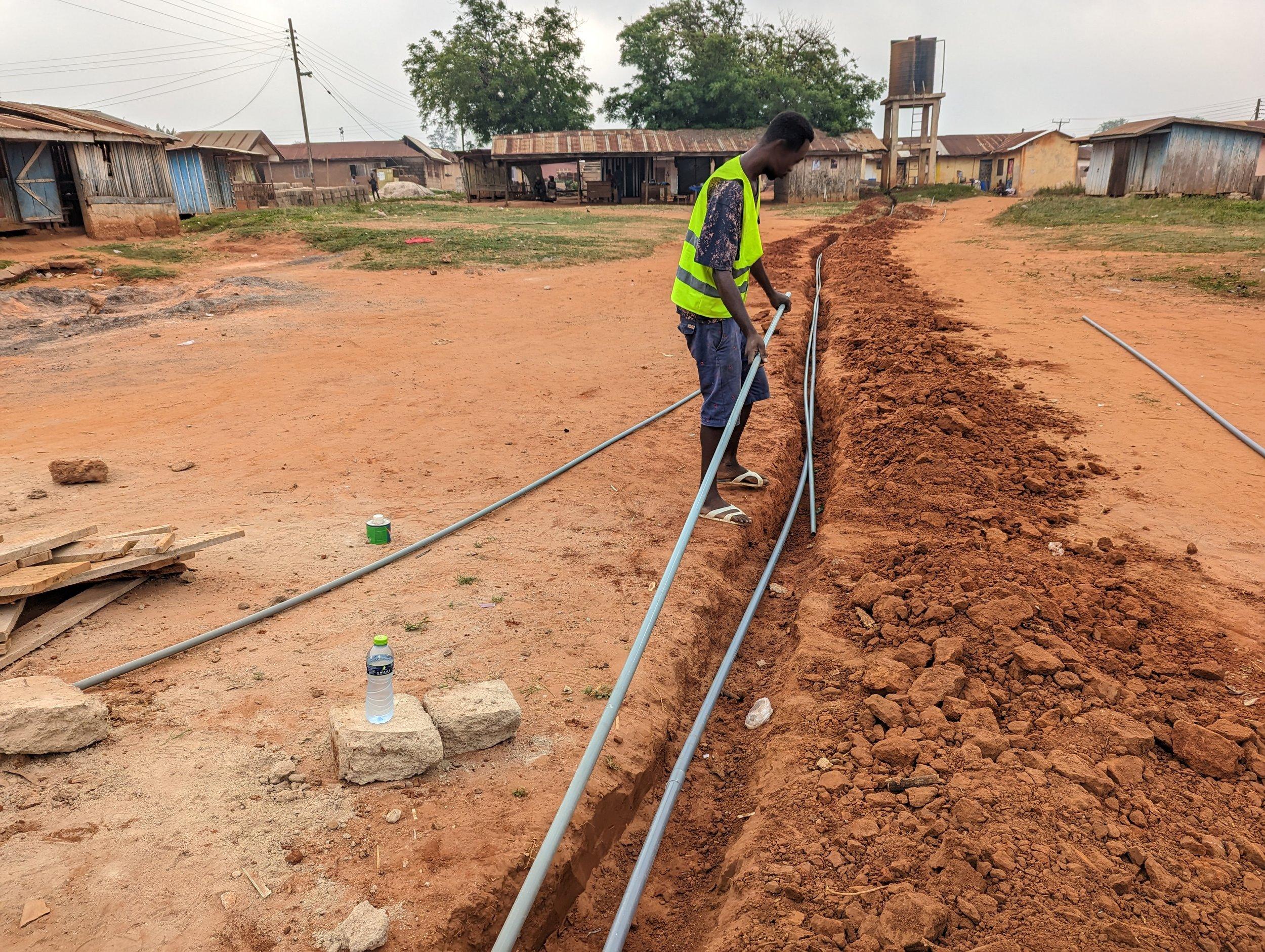
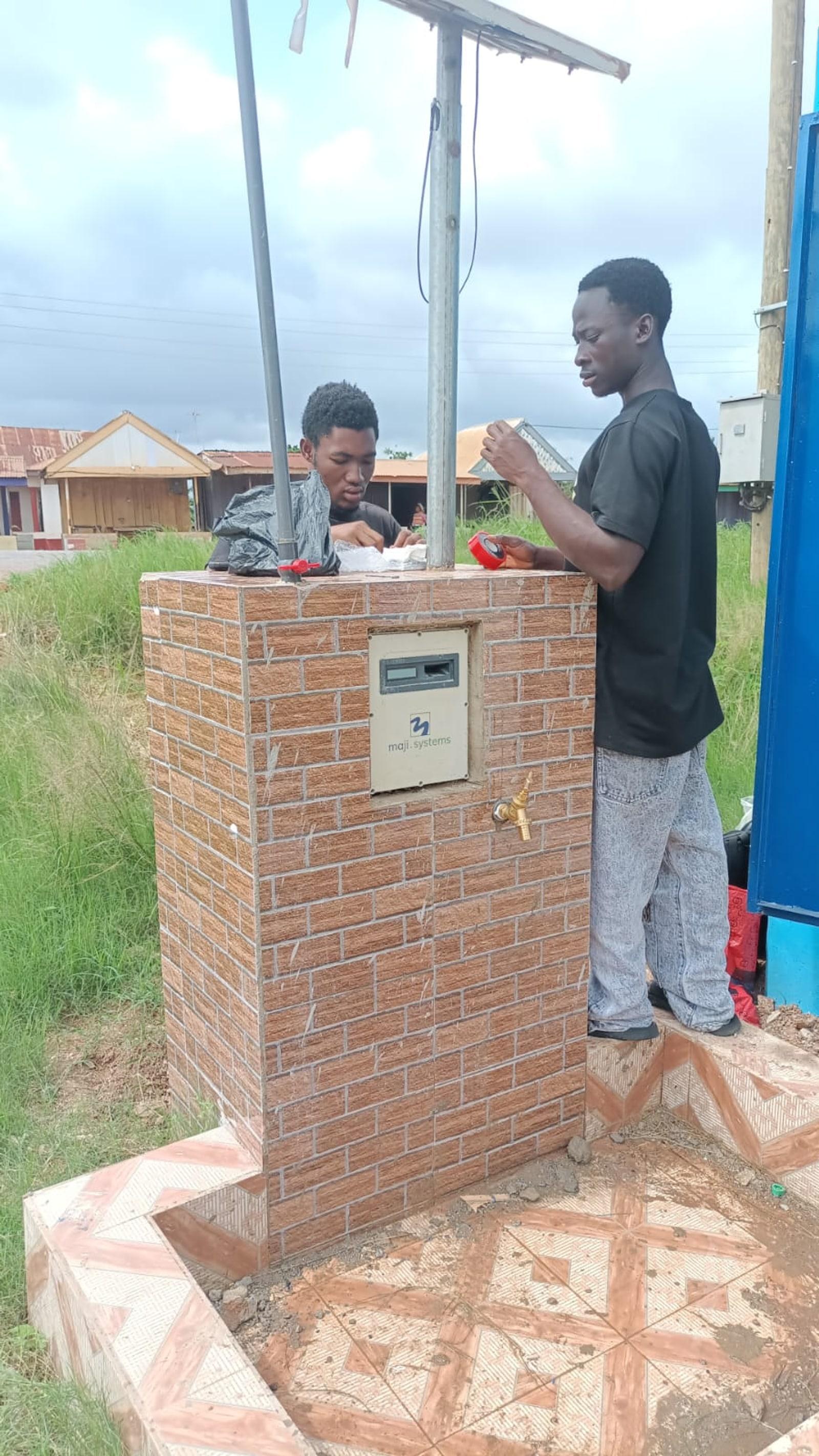
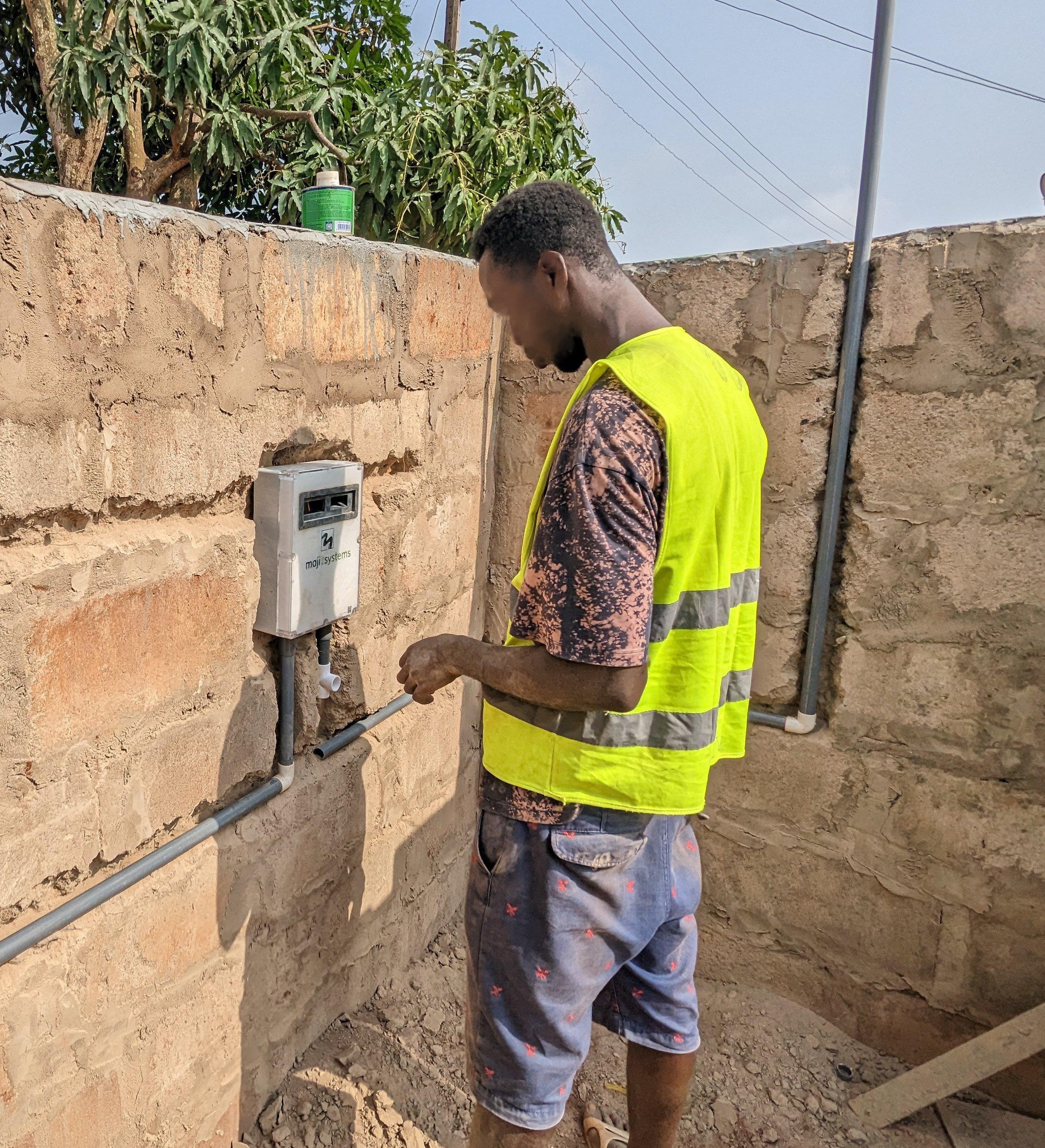
A Maji Community Dispenser being installed on site
Installation — mounts directly to a concrete standpipe or existing water point
A Maji NFC WaterCard, used to prepay for and collect water at the dispenser
The prepaid NFC WaterCard, tapped at the dispenser to draw water
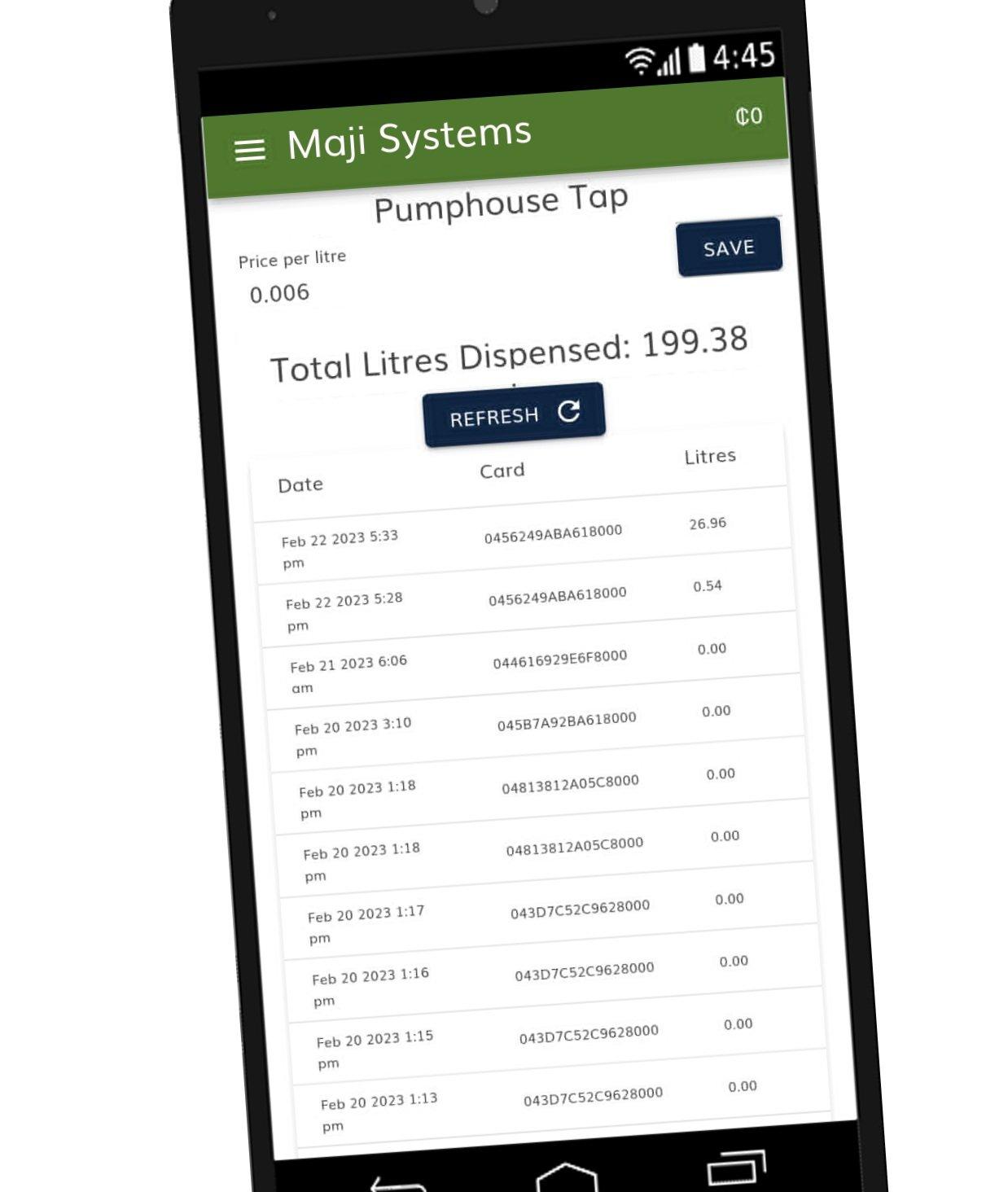
The free Maji WaterCard sales app running on an Android phone
The free Android app — resellers top up WaterCards, even offline
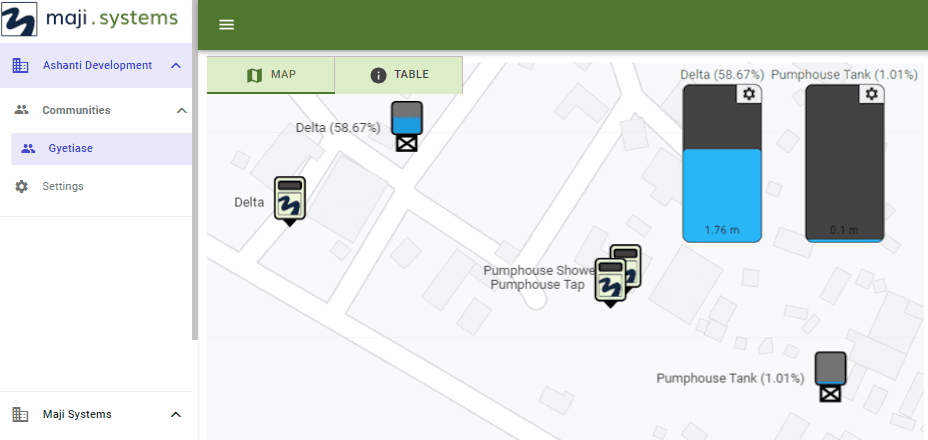
The Maji Systems web dashboard showing transaction and maintenance data
The web dashboard — transaction, revenue and maintenance data in one place

Technical specification

Community Dispenser at a glance

Need the full datasheet or compliance certificates? Ask and we will send them over.

Valve & plumbing

Valve
¾" BSP, auto-closing in the event of power loss
Valve rating
80,000–100,000 cycles (manufacturer rated)
Water inlet/outlet
¾" PVC
Materials
Lead-free, WRAS-approved PVC, brass and stainless steel
Filtration
Cleanable gauze filter
Pressure
0–50 PSI

Flow meter

Pressure rating
Up to 1.75 MPa (17.5 bar)
Flow range
1–25 litres per minute

Payment — NFC WaterCards

Technology
MIFARE DESFire NFC, card data AES encrypted
Card compatibility
DESFire EV1, EV2 and EV3, 4k — compatible cards can be self-sourced
Card durability
Genuine NXP cards rated up to 1 million write cycles; 25-year data retention (EV3)
Cloning resistance
Cards cannot be cloned
Offline collection
Water collection is fully functional with no connectivity

Connectivity

Modem
Any SIM card, any network — 2G, 3G and 4G
Coverage
Functional across Europe, SE Asia, West Asia, Africa, China and Korea
Ancillary devices
RS485 communication bus
Location
GPS
Firmware
Over-the-air updates

Power

Battery
Built-in 12 V Lithium-Ion, 14 Ah — any 12 V battery is also supported
Solar
50 W+ panel, with a built-in 12.6 V regulated solar charge controller
Mains
12 V DC

Case

Rating
IP66 waterproof and dust rating

Data, app & dashboard

Data collection
All transactions and events reported to the cloud, with SD card backup
Telemetry
Pressure, flow rate, power, solar, battery, modem, GPS and GSM maintenance data
App
Free Android 7.0+ WaterCard sales and management app, with offline top-up
Dashboard
Web-based, with long-term trend graphs, data exports and tank height display
API
Cloud API for custom dashboards and payment integrations

Design life

Enclosure & electronics
10+ years expected lifespan
Battery
Replacement every 3–5 years, depending on local solar conditions
Flow meter & valve
Replacement every two years or 100,000 cycles, whichever comes first

Pricing

What it costs to get started

Maji Community Dispenser — Standalone

The complete water point in one enclosure, prepaid metering built in.

£575

per unit, ex. VAT and shipping

Maji Community Dispenser — Flush

A seamless faceplate with the plumbing module mounted separately behind it.

£575

per unit, ex. VAT and shipping

Maji Data & Support Subscription

Cloud hosting, the operator dashboard and API access, kept current.

Price on request

per device, per month

Prices exclude VAT, shipping and installation. Ask for a bulk quote for larger orders.

Questions

Frequently asked

What is the difference between Standalone and Flush?

Both run the same electronics and payment system. Standalone is a single, self-contained unit with integrated plumbing, built to mount directly onto a concrete standpipe or retrofit an existing water point. Flush — also called the Split System — separates the two: a waterproof polycarbonate faceplate sits at the point of use, with the plumbing module installed behind it with rear access, which suits kiosk installations where a flush, tamper-resistant front matters.

Does the dispenser need a grid connection?

No. It runs on a built-in 12 V, 14 Ah lithium-ion battery, charged by a 50 W+ solar panel through a built-in regulated charge controller. A 12 V DC mains input is supported for sites that have one, but it is never required.

What happens when there is no mobile network?

Water collection is fully functional offline — balances live on the NFC WaterCard, so customers can draw water with no connectivity at all. All transactions and events are also written to an SD card for backup, and sync to the cloud once the modem reconnects.

Can it be retrofitted to a water point we already operate?

Yes. The Standalone configuration is designed for exactly this: it mounts onto existing concrete standpipes with no additional civil works.

How do customers pay for water?

Customers hold a prepaid NFC WaterCard, topped up for cash through a local reseller using the free Android app, or directly through the dispenser or an operator’s own systems. Mobile money top-up is available as a bespoke, chargeable integration, quoted case by case.

Can WaterCards be cloned or tampered with?

No. Cards use MIFARE DESFire technology with AES-encrypted data, and cannot be cloned. Genuine NXP cards are rated for up to a million write cycles and, on EV3, 25 years of data retention.

Who maintains the dispensers, and what wears out?

The parts scheduled for routine replacement are the battery (every 3–5 years, depending on local solar conditions) and the flow meter and valve (every two years or 100,000 cycles, whichever comes first) — all available individually on the webstore. The enclosure and core electronics have an expected design life of 10+ years.

Where is data hosted?

All data is hosted and retained in the EU (Germany), and handled in compliance with UK and EU GDPR.

Something not covered here? Ask us directly

Next step

Model the numbers for your own sites

Send us your site list, tariff and expected throughput. We will come back with a recommended configuration — no obligation.